Additive manufacturing services
Additive freedom.
Engineering discipline.
Additive manufacturing for engineering prototypes and low-volume production, with process, material, geometry, finish, and inspection requirements reviewed before quotation.
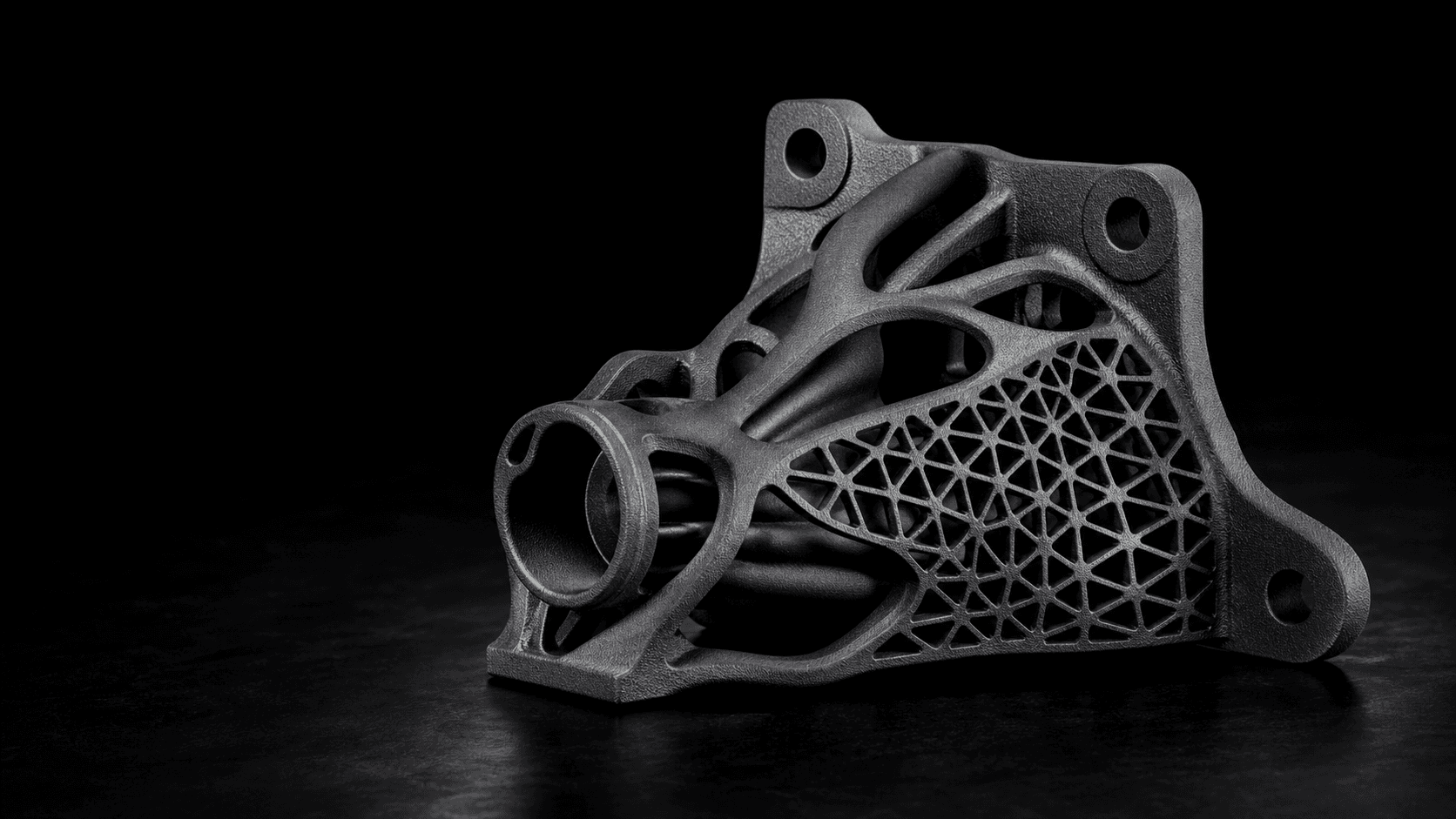
CONCEPT VISUAL / COMPLEX GEOMETRY
Additive manufacturing overview
Complexity becomes an engineering variable.
Additive manufacturing builds geometry layer by layer, creating a different set of opportunities and constraints from subtractive or tooling-led processes. Process selection starts with the part's function, geometry, material intent, and production context.
01
Geometry-led production
Internal features, consolidated structures, and forms shaped by load or flow can be evaluated without conventional tool access.
02
Faster design learning
Geometry can move through defined iterations without committing to dedicated production tooling at every revision.
03
Production-aware output
Functional prototypes and low-volume parts still require controlled requirements, orientation, finishing, and verification.
Supported process categories
Select the route from the engineering requirement.
Exact additive processes are confirmed during RFQ review. The categories below describe how a project is evaluated; they are not an unverified inventory of SLA, SLS, MJF, metal AM, or other named systems.
Polymer additive evaluation
Polymer requests are reviewed around function, feature behavior, surface needs, environment, and required documentation.
Metal additive evaluation
Metal requests are assessed for geometry, loading, material intent, downstream finishing, inspection, and process availability.
Detail-led selection
Fine features, thin sections, enclosed geometry, surface intent, and functional interfaces influence the viable route.
Production-led selection
Quantity, repeat demand, consistency, post-processing, inspection, and release criteria shape process selection.
Material considerations
Material is inseparable from the additive process.
No generic material range is implied. Exact material, grade, condition, color, supply route, and documentation are confirmed against the selected process and project requirements.
Functional requirements
Loading, temperature, environment, wear, impact, electrical behavior, fluid contact, and assembly context guide the review.
Process-material fit
Build behavior, orientation, anisotropy, stability, feature response, and finishing needs must be considered together.
Supply & documentation
Specify the exact material intent, applicable standard, source constraints, traceability expectations, and required records.
Geometry advantages
Use complexity where it creates functional value.
Additive geometry should support performance, integration, iteration, or production logic—not complexity for its own sake. Every advantage remains process- and material-dependent.
Internal pathways
Curved channels, manifolds, and internal routing can be evaluated where access, clearing, inspection, and end use are understood.
Lattice structures
Open or graded internal structures can support weight, stiffness, energy, thermal, or flow objectives when validated for the application.
Part consolidation
Multiple interfaces may be combined to reduce joining or assembly steps when serviceability and verification remain acceptable.
Geometry iteration
Design variants can be evaluated without a dedicated hard tool for each change, supporting structured prototype learning.
Design guidelines
Design for the build, the finish, and the function.
These principles support engineering review but do not replace process-specific rules. Final guidance depends on the confirmed process, material, geometry, orientation, post-processing, and inspection plan.
Build orientation
Orientation affects feature quality, directional behavior, supports, surface condition, downstream work, and inspection access.
Support & access
Identify geometry that may need support, anchoring, removal access, or additional finishing under the selected process.
Feature proportions
Walls, pins, gaps, holes, edges, and transitions should be assessed relative to material, orientation, and process behavior.
Enclosed geometry
Internal cavities and channels require a plan for residual material removal, access, verification, and service conditions.
Functional interfaces
Mating, sealing, bearing, threaded, optical, and datum surfaces should be identified for tolerance and finishing review.
Inspection intent
Define critical features, datums, internal requirements, acceptance criteria, and requested records before production release.
Post processing
The build is not always the finished component.
Removal, preparation, dimensional finishing, surface treatment, and documentation can materially affect part intent. Required operations are confirmed per project rather than assumed.
Build removal
Separation, support removal, and access requirements are evaluated around the selected process and part geometry.
Surface preparation
Cleaning and surface conditioning are reviewed according to material, internal geometry, cosmetic intent, and end use.
Dimensional finishing
Critical mating, sealing, threaded, bearing, or datum features may require a defined downstream finishing strategy.
Functional & cosmetic treatment
Requested treatments, colors, textures, marking, or coatings are reviewed for compatibility, access, and acceptance scope.
Typical applications
Built for learning, function, and controlled demand.
Additive manufacturing supports engineering programs where iteration speed, geometric freedom, or low-volume production logic creates value. Suitability is confirmed from the actual part requirements.
Design validation
Parts used to evaluate packaging, fit, interfaces, ergonomics, assembly sequence, and overall geometry.
Functional prototypes
Components developed to assess motion, load paths, fluid routing, thermal behavior, installation, or system interaction.
Complex structural parts
Topology-informed forms, lattices, integrated interfaces, and consolidated geometry reviewed around real functional goals.
Fixtures & production aids
Assembly, alignment, inspection, handling, routing, and test components shaped around the production workflow.
Low-volume manufacturing
Repeat parts released to an agreed process, material, geometry, finish, inspection scope, and production brief.
Inspection and documentation
Verification follows the critical requirements.
Inspection scope reflects part function, process behavior, accessible and internal geometry, finishing, and requested records. No specific method or certification is implied without agreement.
01
Requirement review
CAD, drawing, material intent, orientation-sensitive features, finish, critical interfaces, and records are aligned.
02
Verification plan
Accessible, internal, functional, and cosmetic requirements are mapped to agreed acceptance criteria and methods.
03
Production checks
Checkpoints are defined according to feature risk, process behavior, post-processing, and the approved release scope.
04
Documentation release
Parts and requested records are evaluated against the agreed project scope before release.
FAQ
Before you select a process name.
Straight answers about how engineering additive projects are evaluated and prepared for quotation.
01Which 3D printing processes do you support?
Process availability is confirmed from the RFQ. We do not publish unverified claims for SLA, SLS, MJF, metal additive manufacturing, or other named systems. Geometry, material, finish, function, quantity, and documentation determine the route to review.
02Which additive manufacturing materials are available?
Exact materials and grades are confirmed per project. Share the required material or its mechanical, thermal, environmental, cosmetic, regulatory, and documentation requirements for process-material review.
03Do you publish standard additive tolerances?
No universal tolerance is stated for every part. Achievable requirements depend on process, material, orientation, geometry, feature relationships, post-processing, and inspection access. Functional requirements should be defined on a drawing.
04What affects quotation and lead time?
Part volume, geometry, orientation, material, quantity, build planning, support or removal needs, post-processing, inspection, documentation, and target timing all affect scope. Timing is confirmed after review.
05Can additive manufacturing support low-volume production?
It can be evaluated for repeat low-volume parts where geometry, process consistency, material, finishing, verification, and economics align. Suitability and production scope are confirmed from the actual project.
06What should I include with an RFQ?
Include a STEP model where available, a PDF drawing, material and finish intent, quantity, target timing, critical features, functional context, post-processing needs, inspection expectations, and required documentation.
Request an additive review
Bring the complex geometry. Explain what it needs to achieve.
Prepare your CAD, drawing, material intent, quantity, finish, critical requirements, inspection needs, documentation, and target timing for engineering review.