Engineering-led manufacturing
One digital entry point.
A controlled production path.
Forgevian connects the RFQ, engineering review, process selection, production coordination, inspection scope, and delivery handoff without reducing manufacturing to an instant price.
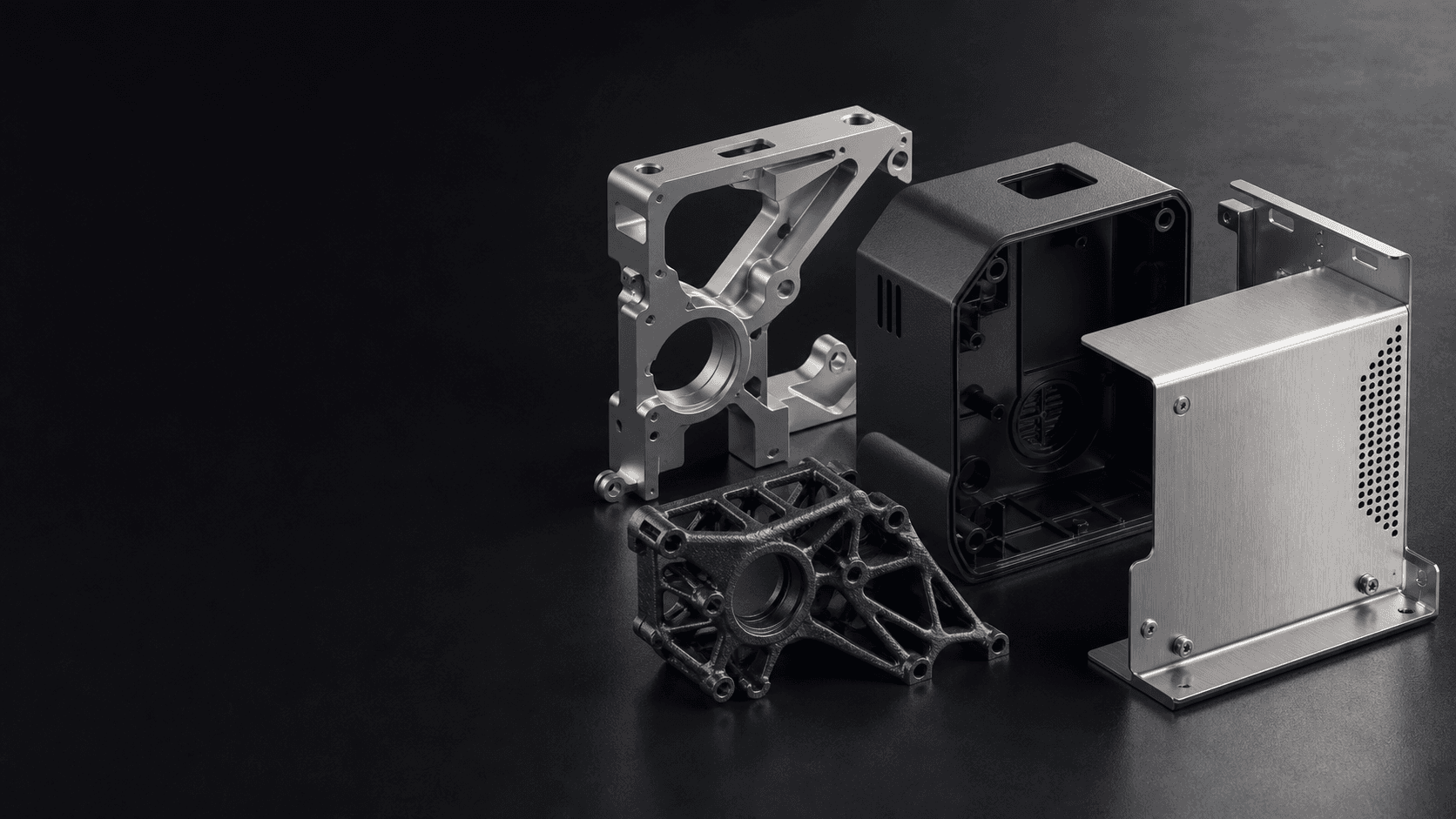
Conceptual CGI / Representative multi-process system
Operating model
Digital at the front. Engineering throughout.
The website is the structured project entry point. Manufacturing decisions remain grounded in the complete requirement, engineering judgment, and an agreed production scope.
01
Structured RFQ
CAD, drawings, material intent, quantity, timing, finish, application context, and documentation needs enter one review path.
02
Engineering alignment
Questions, assumptions, manufacturability concerns, and scope boundaries are clarified before a quotation is treated as production intent.
03
Controlled handoff
Approved requirements move through production coordination, inspection, and delivery with revision and responsibility kept visible.
Engineering team
Review the requirement. Not only the file.
A CAD model describes geometry. A buildable project also needs process context, materials, interfaces, quantity, finish, inspection, and downstream expectations.
Geometry and access
Features, walls, bends, draft, support strategy, tool access, and assembly interfaces are considered in the relevant process context.
Material and finish
Required behavior, exact grade, availability, surface intent, masking, color, texture, and downstream operations are aligned per project.
Quantity and production stage
Prototype learning, bridge demand, released low-volume builds, and repeat orders create different manufacturing priorities.
Inspection and records
Critical characteristics, drawing revision, measurement expectations, material evidence, and requested outputs are defined before production.
Production capability
Four process routes. Selected by requirement.
Published capability pages explain the review logic for each route. Specific equipment, size, tolerance, material, finish, lead time, and availability are confirmed only from the RFQ.
Factory network
A network is valuable only when the handoffs are controlled.
Forgevian does not publish an unverified facility count, machine list, geographic footprint, or capacity figure. Production fit and availability are confirmed for the actual project.
Process fit
The manufacturing route is evaluated against geometry, material, quantity, finish, timing, and any downstream requirements.
Scope alignment
Part definition, responsibilities, assumptions, exclusions, inspection, packaging, and delivery expectations are made explicit.
Revision continuity
The approved CAD, drawing, specification, and project changes must remain aligned across engineering and production handoffs.
Project-specific confirmation
Production source, equipment route, material availability, schedule, and applicable records are confirmed during quotation—not inferred from the website.
Quality control
Inspection follows the engineering intent.
Quality planning begins with the drawing and agreed project requirements. No certification or inspection capability is implied unless confirmed in the quotation.
Requirement review
Confirm revision, material, finish, critical characteristics, assembly context, and requested documentation before the build begins.
In-process control
Production checks are determined by the selected process, feature risk, approved plan, and project-specific acceptance criteria.
Final inspection
Completed parts are evaluated against the agreed drawing and scope using the methods and records confirmed for the project.
Nonconformance visibility
Deviations require documented review and disposition rather than silent reinterpretation of the customer requirement.
Manufacturing workflow
From uploaded geometry to delivered hardware.
The workflow creates decision points before production. It is not an automatic quotation or a substitute for engineering review.
01 / RFQ
Upload
Share CAD, drawings, material, quantity, timing, finish, and project context.
02 / ALIGN
Review
Engineering evaluates process fit, open questions, constraints, risks, and requested evidence.
03 / APPROVE
Quote
The commercial scope reflects clarified assumptions, deliverables, timing, and production intent.
04 / BUILD
Manufacture
Approved requirements move into the confirmed production and inspection workflow.
05 / HANDOFF
Deliver
Parts, agreed records, packaging, and shipment complete the controlled handoff.
Scope transparency
Trust starts with what is—and is not—confirmed.
A premium manufacturing relationship depends on explicit requirements and honest boundaries, not broad claims disconnected from the project.
01
Confirmed before quotation
Process route, material intent, quantity, finish, timing, inspection scope, documentation, assumptions, and exclusions are reviewed against the RFQ.
02
Not claimed on this page
No facility count, machine inventory, capacity, tolerance, lead time, geographic footprint, certification, or guaranteed material range is published without verification.
03
Defined by the customer
Product performance, intended use, applicable regulations, validation, critical characteristics, and acceptance requirements remain customer inputs unless separately scoped.
Manufacturing FAQ
Clarity before production commitment.
The answers below describe the operating model without replacing a project-specific engineering and commercial review.
01Is quotation automatic after a CAD upload?+
No. The MVP uses an engineering-reviewed RFQ. CAD, drawings, material, quantity, finish, timing, application context, and documentation needs are reviewed before quotation.
02Which factory or machine will produce my parts?+
The production route, source fit, equipment approach, availability, and project scope are confirmed during review and quotation. This page does not make a blanket facility or machine claim.
03What quality records are included?+
Records depend on the drawing, process, critical characteristics, customer requirement, and agreed quotation. Specify the exact material and inspection documentation needed in the RFQ.
04Can a project combine several manufacturing processes?+
Yes. A product may combine machined, molded, additive, and fabricated parts. Each component and the shared assembly interfaces require review before the combined scope is confirmed.
Start the manufacturing conversation
Bring the complete requirement—not only the CAD.
Share geometry, drawings, material, quantity, timing, finish, application, inspection, and documentation expectations. Engineering will review the production context before quotation.