CNC machining services
CNC machining,
engineered around the part.
From functional prototypes to low-volume production, each project is reviewed around geometry, material, tolerance intent, finish, and end use before quotation.
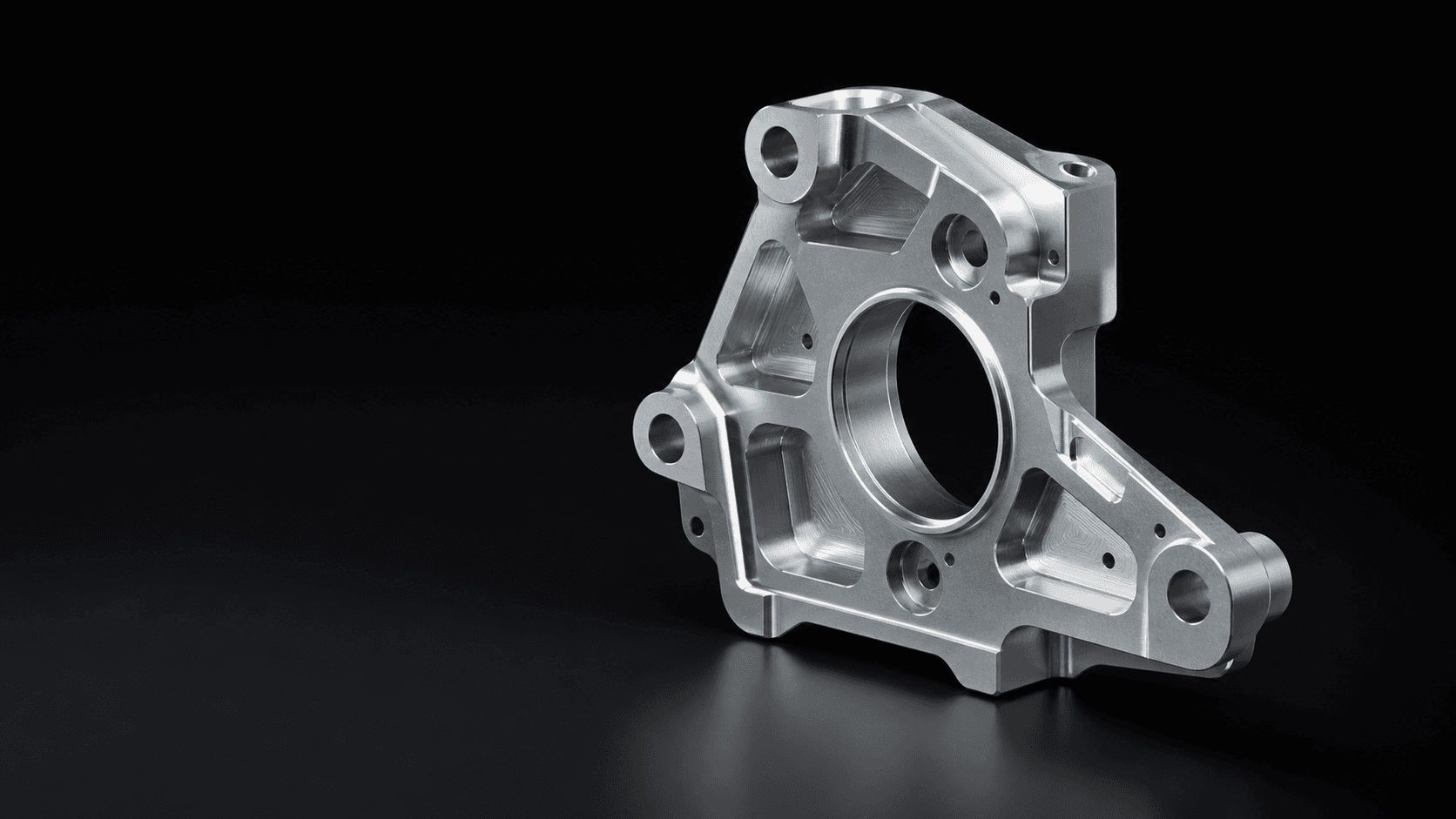
CONCEPT VISUAL / MACHINED COMPONENT
CNC overview
The process starts with engineering intent.
CNC machining removes material through controlled cutting operations. The right production plan depends on how a part's geometry, functional interfaces, material, and surface requirements interact—not on geometry alone.
01
Functional context
Critical interfaces, loading conditions, assembly relationships, and cosmetic expectations shape the review.
02
Manufacturing logic
Tool access, workholding, feature sequence, and datum strategy are considered together.
03
Production intent
Prototype learning, repeatability needs, and expected quantity influence the proposed route.
Capabilities
A machining route defined by the geometry.
Capabilities are confirmed against the submitted CAD and drawing. We do not apply an unverified equipment list or universal specification to every project.
CNC milling
Prismatic parts, pockets, bores, profiles, and accessible multi-face features reviewed around tooling and workholding.
CNC turning
Rotational components and concentric features evaluated around stock, feature access, and inspection intent.
Mixed-feature planning
Parts combining rotational and prismatic features are assessed for an appropriate operation sequence.
Secondary requirements
Threads, inserts, finishing, marking, and assembly needs are documented and confirmed as part of the project scope.
Project-specific review
Confirmed from your files. Not assumed from a generic capability table.
Share the complete engineering context so that feasibility, inspection expectations, and commercial scope can be aligned before production.
Geometry envelope
Reviewed against the submitted CAD model.
Tolerance intent
Reviewed feature by feature from the drawing.
Lead time
Quoted after geometry, material, quantity, and finish review.
Inspection & documentation
Agreed before production based on project requirements.
Materials
Material selection follows function.
Material availability and process fit are confirmed during engineering review. Exact grades, condition, and required documentation should be included with the RFQ.
Metals
Metal requirements are assessed around mechanical performance, stability, machinability, finish, and availability.
Engineering polymers
Polymer requirements are reviewed for dimensional behavior, function, thermal conditions, and cosmetic needs.
Customer-specified material
Provide the exact grade, condition, applicable standard, and documentation requirement for confirmation.
Design guidelines
Design decisions that clarify manufacturing intent.
These principles help make a review more productive. They are not substitutes for project-specific design validation or an approved engineering drawing.
Tolerance by function
Apply tighter requirements only where fit, motion, sealing, alignment, or performance depends on them.
Tool access
Consider whether cutting tools can reach deep pockets, side features, and internal geometry without unnecessary operations.
Internal geometry
Machined internal corners require tool-compatible radii; deeper features may require additional reach and process planning.
Wall behavior
Thin or uneven sections can respond to workholding and material removal, so functional context should be identified.
Datum strategy
Use clear datums and feature relationships so manufacturing and inspection reference the same intent.
Threads and inserts
Call out thread standards, class or fit intent, depth, insert type, and assembly requirements on the drawing.
Surface finishes
Finish is part of the engineering brief.
Finish requirements affect material selection, masking, dimensional intent, cosmetic expectations, and quotation. Each requirement is reviewed before it is included in scope.
As-machined intent
Define whether machining marks are acceptable and identify any surfaces with a specific functional requirement.
Functional surfaces
Bearing, sealing, sliding, mating, and adhesive surfaces should be clearly identified on the drawing.
Cosmetic surfaces
Specify visible zones, appearance expectations, color intent, and any controlled reference standard.
Post-processing
Requested treatments are reviewed for material compatibility, dimensional impact, masking, and availability.
Applications
Built for parts with a defined job to do.
CNC machining supports development and production across a wide range of engineering programs. Suitability is determined from the actual part requirements.
Functional prototypes
Parts used to evaluate fit, assembly, motion, thermal behavior, or mechanical performance.
Fixtures and tooling
Workholding, test, alignment, and production-support components defined around their operating context.
Structural components
Housings, brackets, frames, and interfaces where material and geometry support a functional assembly.
Electromechanical parts
Components that locate motors, sensors, connectors, optics, thermal elements, or moving assemblies.
Low-volume production
Repeat parts produced to an agreed drawing, material, finish, inspection plan, and release scope.
Inspection workflow
Quality begins before the first operation.
Inspection scope is aligned to the drawing and project requirements. Methods, records, and acceptance criteria are confirmed rather than implied.
01
Requirement review
CAD, drawing, material, finish, functional features, and documentation needs are reviewed together.
02
Inspection planning
Critical characteristics, reference datums, acceptance criteria, and requested records are aligned.
03
Production checkpoints
Checks are placed within the production plan according to feature risk and agreed requirements.
04
Final verification
Parts are evaluated against the approved scope before release, with agreed documentation supplied.
FAQ
Before you send the files.
Straight answers about how CNC projects are reviewed and prepared for quotation.
01Do you publish a standard CNC tolerance?
No universal tolerance is stated for every part. Achievable requirements depend on geometry, material, feature relationships, process sequence, and inspection method. Submit a drawing with functional tolerances for engineering review.
02Which CNC machining materials are available?
We review metals and engineering polymers. Exact grades, condition, required standards, and material documentation are confirmed from the RFQ rather than assumed from a generic list.
03What information affects quotation and lead time?
Geometry, material, quantity, tolerances, finish, inspection scope, documentation, and target timing all affect the production plan. A complete CAD model and drawing help reduce assumptions.
04Can surface finishing be included?
Requested post-processing can be reviewed as part of the project. Availability, material compatibility, masking, dimensional impact, cosmetic criteria, and documentation must be confirmed before quotation.
05What should I include with an RFQ?
Include a STEP model where available, a PDF drawing for tolerances and notes, material and finish requirements, quantity, target timing, inspection expectations, and any relevant assembly context.
06How is inspection scope defined?
Inspection is defined from the drawing, critical features, acceptance criteria, and requested records. The agreed scope is confirmed before production; no specific method or report is implied without that agreement.
Request a CNC review
Bring the CAD. Keep the engineering context attached.
Prepare your model, drawing, material, quantity, finish, inspection requirements, and target timing for engineering review before quotation.