Robotics manufacturing
Build the machine.
Refine the motion.
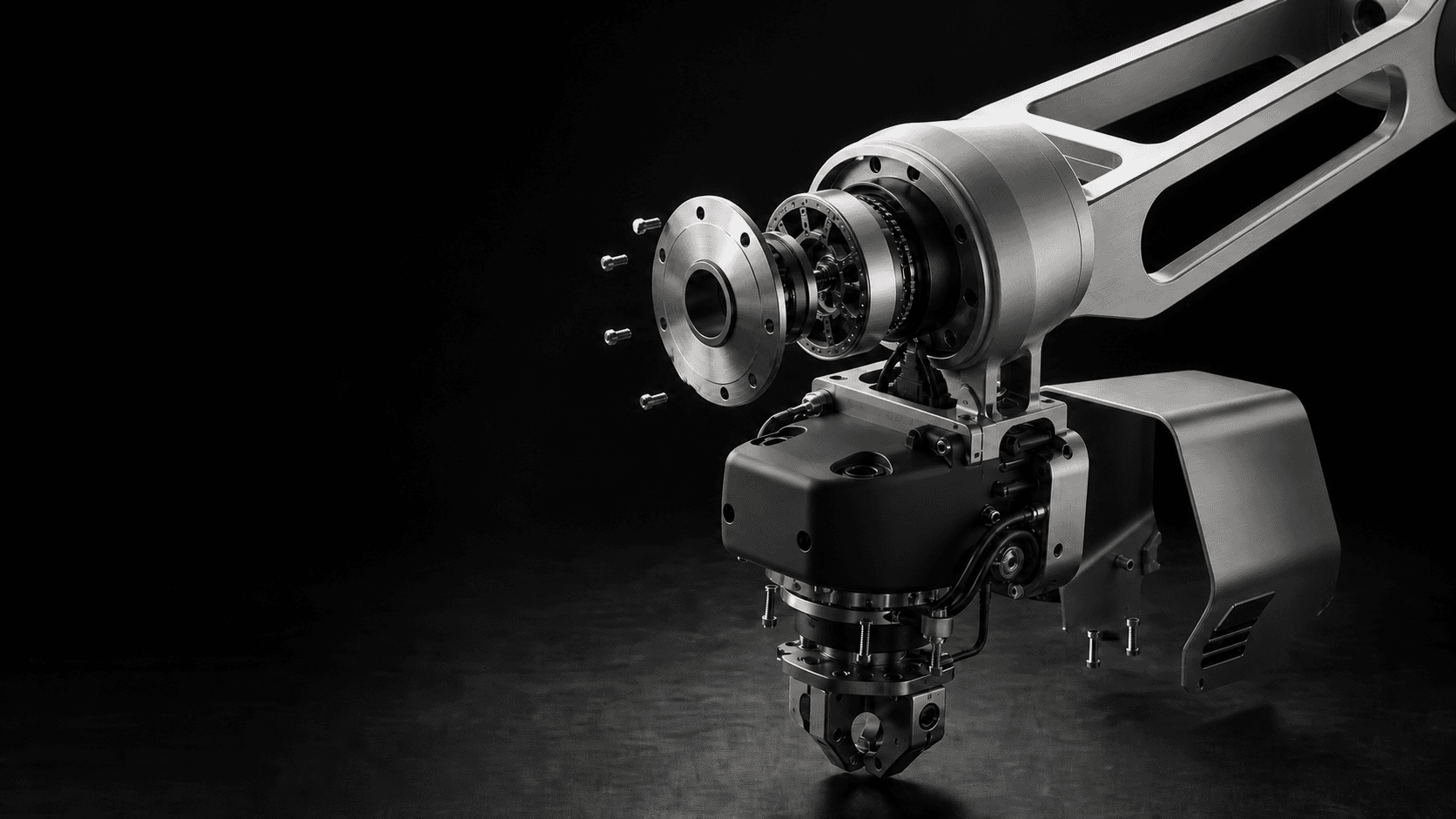
Manufacturing support for robotics hardware where structure, alignment, sensing, cable routing, and repeated iteration must work as one physical system.
Conceptual CGI / Representative engineering context
Industry context
Robotics is a system problem. Every interface carries consequences.
A robotics component rarely operates alone. Motion, structure, sensing, wiring, access, and service requirements shape the manufacturing decision together.
01
Motion architecture
Loads, movement envelopes, joint interfaces, and adjacent mechanisms define which features deserve early manufacturing attention.
02
Physical environment
Handling, impact, wear, temperature, contamination, and operator contact should be described before material or finish is selected.
03
Iteration cadence
Prototype hardware must support learning without losing sight of assembly intent and the path toward repeatable builds.
Engineering challenges
Resolve the constraints before they meet on the assembly bench.
The most useful manufacturing review connects component geometry to system-level behavior rather than treating each file in isolation.
Stiffness versus weight
Structural intent, mass location, feature access, and material choice must be considered together—especially around moving assemblies.
Alignment and datum chains
Motor, bearing, sensor, rail, and tool interfaces need a clear datum strategy so critical relationships survive fabrication and assembly.
Cable and sensor packaging
Routing volumes, bend allowances, connector access, protection, and service paths compete for space inside compact mechanisms.
Iteration without drift
Rapid revisions need disciplined drawing, interface, and configuration control so learning is preserved across each physical build.
Typical component types
Hardware around motion, sensing, and structure.
The right process depends on the component's role in the wider mechanism. Final scope and manufacturability remain subject to engineering review.
Structural housings and links
Load-bearing bodies, joint housings, frames, and link components where interfaces and mass distribution affect system behavior.
Motor and actuator interfaces
Mounts, adapters, bearing carriers, and transmission interfaces developed around alignment, access, and assembly sequence.
Sensor mounts and protective parts
Brackets, bezels, covers, and routing features that locate sensing hardware while preserving visibility, access, and protection.
End-of-arm and test hardware
Tooling bodies, gripper concepts, adapters, fixtures, and validation hardware designed around the task and expected loading context.
Enclosures, guards, and panels
Fabricated or molded components that organize electronics, shield moving areas, and support maintenance access without defining safety compliance.
Manufacturing solutions
Match the process to the component's job.
Process selection is based on geometry, material intent, quantity, finish, and assembly context. These are review routes, not blanket capability claims.
Material considerations
Select for the system. Then confirm for the process.
Material selection should begin with the engineering requirement. Availability, grade, process compatibility, and documentation are confirmed during review.
Strength, stiffness, and mass
Use load cases, deflection sensitivity, moving mass, and geometry to frame material tradeoffs instead of selecting by material name alone.
Wear and operating context
Contact, friction, impact, temperature, contaminants, and maintenance expectations can change both material and surface decisions.
Finish and integration
Cosmetic zones, electrical contact, bonding, fastening, sliding interfaces, and downstream assembly should be identified on the requirements package.
Prototype to production
Preserve engineering intent as the build evolves.
A staged workflow lets teams learn from physical hardware while progressively tightening the definition required for repeatable production.
01 / CONCEPT
Explore
Build early components to evaluate packaging, reach, access, routing, and major mechanical interfaces.
02 / FUNCTION
Validate
Test form, fit, motion, loading assumptions, sensor placement, and assembly behavior in the intended system context.
03 / RELEASE
Refine
Update geometry, drawings, materials, finishes, hardware, datums, and revision control around what the build revealed.
04 / BUILD
Produce
Move approved requirements into a controlled low-volume workflow with the inspection scope agreed for the project.
Quality considerations
Inspect what controls the mechanism.
Inspection should follow function. The drawing and project review define what is critical, how it is evaluated, and which records are required.
Datum architecture
Identify the origins and relationships that control bearings, motors, sensors, rails, and tool interfaces.
Assembly fit
Clarify mating components, fastener strategy, inserts, press or slip relationships, and the intended assembly sequence.
Moving clearances
Call out zones where stack-up, cable motion, guards, or adjacent mechanisms create functional clearance risk.
Evidence required
Define the drawing revision, critical characteristics, inspection method expectations, and documentation scope before production.
Related capabilities
One product system. Multiple manufacturing routes.
Robotics programs often combine processes. Each route is reviewed independently, then considered within the shared assembly context.
Robotics FAQ
Start with the engineering context.
The most useful RFQ explains how the component interacts with the wider mechanism—not only what the isolated geometry looks like.
01What should be included in a robotics RFQ?
Share the CAD, drawings, quantity, target material, finish, timing, assembly context, critical interfaces, and any inspection or documentation expectations. Load, motion, cable, and environmental context are also useful where relevant.
02Can you choose the manufacturing process from the CAD alone?
CAD is a starting point, but process selection also depends on material intent, quantity, finish, critical relationships, end use, and production stage. Engineering review is required before a route is confirmed.
03Can one project combine multiple manufacturing processes?
Yes, a robotics assembly may contain machined, fabricated, additive, or molded components. Each component and its interfaces must still be reviewed for process fit and project scope.
04Do you guarantee system-level robotics performance?
No. Manufacturing review and inspection address the agreed component requirements. System design, controls, safety, validation, and performance remain part of the customer's engineering responsibility unless separately defined in writing.
Start a robotics RFQ
Share the mechanism behind the part.
Upload the geometry and describe the component's role, target material, quantity, timing, interfaces, and inspection expectations. Engineering will review the complete context before quotation.